What Is Glycolic Acid?
Glycolic acid is an alpha hydroxy acid (AHA) commonly used in skincare for chemical exfoliation.
Unlike physical exfoliation, which relies on friction or abrasive particles, glycolic acid helps loosen the bonds between accumulated surface skin cells so they can shed more readily.
This can help reveal skin that looks:
-
smoother;
-
brighter;
-
more even in appearance; and
-
more radiant.
Glycolic acid has a relatively small molecular size compared with other commonly used AHAs, which contributes to its effectiveness as an exfoliating ingredient.
But the percentage printed on the bottle tells only part of the story.
With Glycolic Acid, Percentage Isn't Everything
It's easy to assume that a higher percentage of glycolic acid automatically means a better treatment.
It doesn't.
How glycolic acid behaves on the skin also depends on factors such as the pH of the finished formulation and how the acid is balanced within that formula.
Generally, lower pH means more of the glycolic acid is present in its free-acid form. This can increase exfoliating activity — but it can also increase the potential for irritation.
So formulation is a balancing act.
A glycolic treatment needs to be effective enough to provide meaningful exfoliation without simply pursuing maximum intensity.
Effective exfoliation, thoughtfully balanced for skin tolerance.
That philosophy matters because overly aggressive acid use can contribute to stinging, redness, peeling, dryness, or irritation.
Effective skincare isn't a competition to see how much acid your skin can tolerate.
Gentle but Effective Also Depends on How You Use It
Even a thoughtfully formulated glycolic acid treatment can become unnecessarily irritating when it is used incorrectly.
Problems can arise when an exfoliating acid is:
-
used too frequently;
-
increased too quickly;
-
combined with several other strong exfoliating treatments;
-
applied to already irritated or compromised skin;
-
used at an inappropriate point in the skincare routine; or
-
accompanied by excessive sun exposure without adequate protection.
More exfoliation does not necessarily produce better skin.
A good formulation still depends on appropriate frequency, timing, and attention to your skin's response.
That's why Metrin AP1 is designed for periodic nighttime use, 1–3 times weekly according to skin tolerance.
The goal is meaningful accelerated exfoliation — not aggressive exfoliation for its own sake.
Had a Bad Experience With Glycolic Acid Before?
If an acid treatment has previously left your skin red, uncomfortable, excessively dry, or peeling, it's understandable to be cautious about trying glycolic acid again.
But that experience doesn't necessarily mean every glycolic acid formulation will behave the same way on your skin.
Your previous experience may have been influenced by:
-
glycolic acid concentration;
-
product pH;
-
the overall formulation;
-
how frequently you applied it;
-
how quickly you increased use;
-
other exfoliating ingredients in your routine;
-
applying acids to already sensitized skin; or
-
inadequate attention to sun sensitivity.
Individual tolerance varies, and no glycolic acid product can guarantee that irritation will never occur.
The useful question isn't simply:
“How strong is it?”
It's:
“How is it formulated — and how is it intended to be used?”
Metrin's approach is to use glycolic acid periodically and purposefully within a complete skincare ritual.
Why Accelerated Exfoliation?
Your skin naturally sheds surface cells as part of its ongoing renewal process.
Sometimes those surface cells accumulate, contributing to skin that looks:
-
dull;
-
rough;
-
uneven in texture;
-
uneven in tone;
-
congested; or
-
less radiant.
Periodic glycolic acid treatment provides accelerated exfoliation beyond everyday skincare.
The goal isn't to exfoliate as aggressively or as frequently as possible.
It's to periodically help remove accumulated surface cells when your skin can benefit from more intensive exfoliation — and then support your skin afterward.
What Can Glycolic Acid Help With?
Dullness and Loss of Radiance
Accumulated surface cells can leave skin looking flat or dull.
By helping loosen and remove those cells, glycolic acid can help reveal a fresher, brighter-looking complexion.
Rough or Uneven Texture
Glycolic acid helps exfoliate accumulated surface cells that can contribute to roughness.
With appropriate periodic use, skin may appear smoother and more refined.
Uneven-Looking Skin Tone
Surface-cell buildup can contribute to an uneven-looking complexion.
Accelerated exfoliation helps remove accumulated surface cells over time, supporting a brighter and more even-looking appearance.
Visible Dark Spots and Sun-Related Discoloration
Sun exposure can contribute to localized areas of visible pigmentation and uneven-looking tone.
Because glycolic acid promotes exfoliation of surface cells, periodic use can help improve the appearance of visible dark spots and areas of uneven-looking discoloration over time.
Glycolic acid does not prevent new pigmentation from forming.
That's one reason sun protection is particularly important when using an AHA.
Post-Blemish Dark Marks
Sometimes the blemish disappears but a darker-looking mark remains.
Periodic glycolic acid exfoliation can help improve the appearance of these post-blemish marks by gradually removing accumulated pigmented surface cells and supporting a more even-looking complexion.
This is different from treating the active blemish itself.
Congestion and Breakout-Prone Skin
Dead surface cells can contribute to congestion when they accumulate and mix with excess oil.
By helping remove that buildup, glycolic acid can support a clearer-looking skin surface and address one of the factors that may contribute to clogged pores and breakouts.
That doesn't make glycolic acid — or Metrin AP1 — an acne medication.
Its primary role is exfoliation.
Can Glycolic Acid Be Used on Specific Areas?
Yes.
Glycolic acid doesn't always need to be applied over the entire face.
AP1 Radiance Renewal Serum may also be applied selectively where more focused exfoliation is desired, including areas of:
-
visible dark spots;
-
uneven-looking tone;
-
lingering post-blemish marks; or
-
localized rough texture.
Keep use within the same recommended frequency.
Do not increase application frequency simply because the treatment area is smaller.
Avoid applying glycolic acid to broken, irritated, or actively inflamed skin.
What Is Skin Purging?
“Skin purging” is a popular skincare term used to describe temporary blemishes or breakouts that some people report after introducing ingredients that affect exfoliation or skin-cell turnover.
However, not every breakout after starting a new product is purging.
A reaction may instead indicate irritation, sensitivity, over-exfoliation, incompatibility with another product, or an unrelated breakout.
That distinction matters.
You shouldn't assume that worsening redness, burning, persistent discomfort, or an unusual breakout means a product is “working” and that you simply need to push through it.
Sometimes what gets described as “purging” may actually be a sign that the formulation, frequency, combination of products, or treatment intensity is too much for the skin at that time.
Skin Purging vs. Breakout vs. Irritation
There isn't a perfect at-home test, but a few observations can help.
Timing
A temporary change associated with introducing an active ingredient generally occurs after that ingredient has been added to the routine.
A breakout unrelated to the new product may occur regardless of when the product was introduced.
Location
What people describe as purging is often reported in areas where they are already prone to congestion or blemishes.
A new or unusual reaction in an area where you normally don't experience breakouts deserves closer attention.
How Your Skin Feels
A few temporary blemishes are different from significant burning, persistent redness, swelling, itching, excessive peeling, or ongoing discomfort.
Those signs shouldn't automatically be dismissed as purging.
If significant irritation develops, reduce or discontinue use as appropriate. If symptoms are severe, persistent, or concerning, seek advice from an appropriate healthcare professional.
Does Glycolic Acid Always Cause Purging or Redness?
No.
Not everyone experiences breakouts, redness, or a noticeable adjustment period when introducing glycolic acid.
Your experience can depend on:
-
your skin;
-
glycolic acid concentration;
-
formulation and pH;
-
frequency of use;
-
other products in your routine; and
-
your previous experience with exfoliating ingredients.
That's why Metrin recommends accelerated exfoliation according to your skin's tolerance rather than assuming more frequent or stronger treatment is better.
How to Introduce Glycolic Acid More Thoughtfully
Start Gradually
If glycolic acid is new to you — or if you've reacted poorly to another glycolic product in the past — begin conservatively.
Give your skin time to respond before increasing frequency.
Use It at the Right Time
Metrin AP1 is designed for nighttime use.
Apply it to clean, dry skin and leave it on overnight.
Apply to Clean, Dry Skin
Using glycolic acid on clean, dry skin provides a consistent starting point and avoids applying the treatment over accumulated product residue.
Avoid Over-Exfoliating
More isn't necessarily better.
Combining multiple acid treatments, scrubs, retinoids, or other intensive exfoliating products may increase irritation.
Pay Attention to Frequency
AP1 is intended for 1–3 uses per week according to tolerance.
Increasing frequency beyond the recommended use does not necessarily produce faster or better results.
Pay Attention to Your Skin
Temporary tingling can occur with an AHA treatment.
Persistent burning, significant redness, swelling, or discomfort shouldn't simply be ignored.
Protect Your Skin From the Sun
AHAs can increase skin sensitivity to sunlight.
Use sunscreen and limit sun exposure while using AP1 and for one week afterward, consistent with the product directions.
This is especially important when your goal is to improve the appearance of sun-related dark spots or uneven-looking pigmentation.
The Metrin Approach: Daily Care + Periodic Accelerated Exfoliation
Metrin approaches skincare as a system rather than a collection of disconnected products.
Daily cleansing, gentle exfoliation, conditioning, and protection provide the foundation.
More intensive exfoliation has a different job.
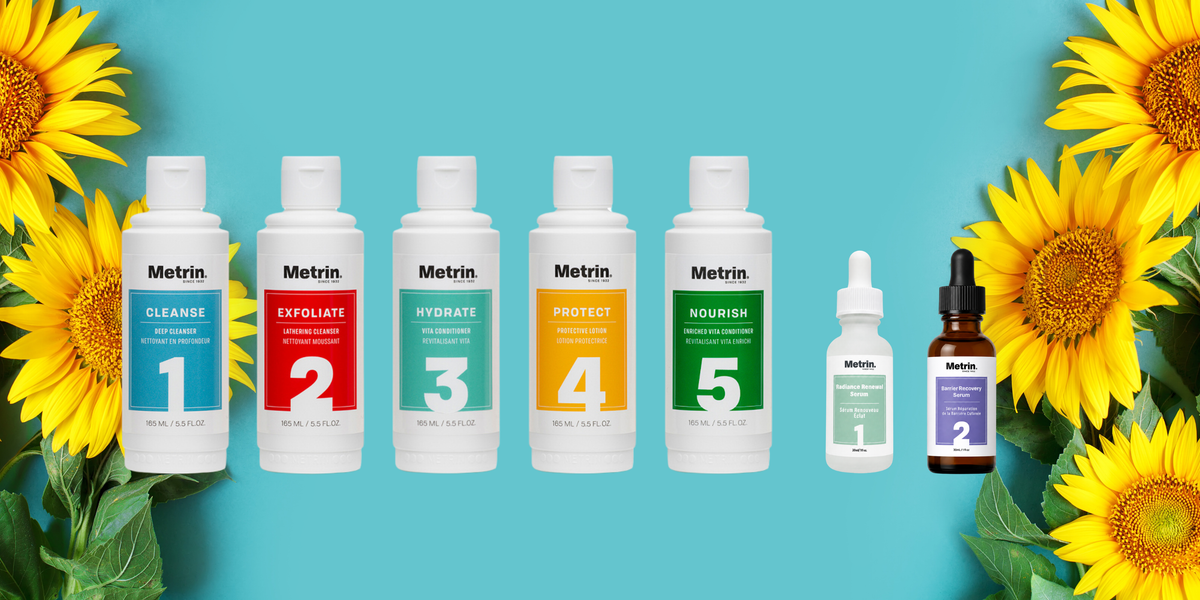
That's where the Metrin Accelerated Performance System — APS fits.
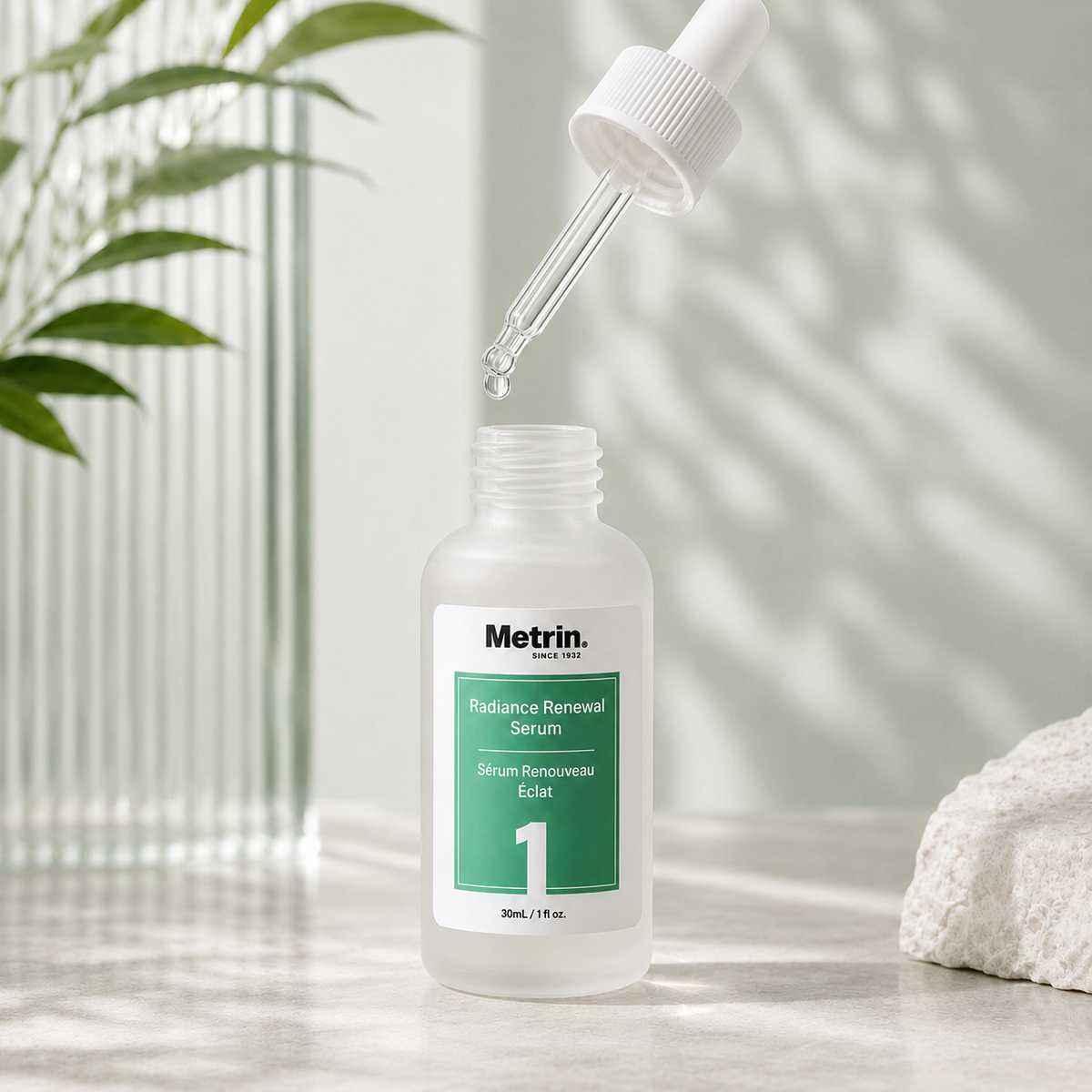
AP1 Radiance Renewal Serum
Renew
AP1 is a 10% glycolic acid exfoliating treatment designed to provide:
Effective exfoliation, thoughtfully balanced for skin tolerance.
It is intended for periodic nighttime use rather than continuous or increasingly aggressive exfoliation.
AP1 can be used over the face for accelerated exfoliation or applied selectively to areas where more focused exfoliation is desired.
It can help improve the appearance of:
-
dullness;
-
rough or uneven texture;
-
uneven-looking tone;
-
visible dark spots;
-
post-blemish marks;
-
congestion associated with accumulated surface cells; and
-
loss of visible radiance.
Apply a thin layer to clean, dry skin at night and leave it on overnight.
Use 1–3 times weekly according to skin tolerance.
The goal isn't maximum exfoliation.
It's effective accelerated exfoliation delivered thoughtfully and used appropriately.
Why Recovery Matters After Exfoliation
Exfoliation is only half the APS story.
After AP1 has remained on the skin overnight, the following morning begins the recovery phase.
For Metrin users, the preferred approach is to thoroughly cleanse away AP1 using the appropriate Metrin cleansing sequence.
By morning, AP1 is present along with the oils, perspiration, and surface impurities that naturally accumulate while you sleep.
Thorough cleansing removes the overnight treatment and accumulated residue, leaving a clean starting point for the next phase of care.
Then apply AP2 Barrier Recovery Serum.
AP2 Barrier Recovery Serum
Recover
AP2 supports renewal in a different way.
Rather than adding more exfoliation, AP2 provides hydration, soothing, conditioning, and barrier-supporting recovery care.
Its multi-ingredient formula helps replenish moisture and support comfortable, supple-looking skin after accelerated exfoliation.
AP1 renews through exfoliation.
AP2 supports renewal through replenishment.
After AP2, continue the appropriate remaining steps of your regular Metrin Skincare System.
Renew. Recover. Reveal.
This is the thinking behind APS.
Renew
Help remove accumulated surface cells through periodic 10% glycolic acid exfoliation.
Recover
Replenish hydration and provide soothing, conditioning, and barrier-supporting care afterward.
Reveal
Smoother, brighter, more even-looking, visibly radiant skin.
Your Metrin Skincare System remains the foundation of consistent daily care.
Frequently Asked Questions
1. I tried glycolic acid before and my skin became red. Does that mean glycolic acid isn't for me?
Not necessarily. A previous reaction may have been influenced by glycolic acid concentration, product pH and formulation, frequency of use, combining several exfoliating treatments, or individual skin sensitivity.
If you choose to try glycolic acid again, introduce it gradually, use it only as directed, and pay attention to your skin's response.
Persistent or significant irritation is a reason to reduce or stop use rather than simply “push through.”
2. Is a higher percentage of glycolic acid better?
Not necessarily.
Percentage is only one aspect of a glycolic acid treatment.
The overall formulation and pH also influence its exfoliating activity and how the skin experiences it.
The goal should be effective exfoliation balanced with appropriate skin tolerance — not simply the highest percentage available.
Effective Exfoliation Doesn't Have to Mean Aggressive Exfoliation
The goal of skincare isn't to make your skin tolerate the strongest treatment possible.
It's to care for your skin consistently and intelligently over time.
A thoughtful glycolic acid treatment considers more than the percentage on the bottle.
It considers:
formulation;
pH;
frequency;
timing;
skin tolerance;
recovery care; and
sun protection.
When accelerated exfoliation is appropriate, the goal is to remove accumulated surface cells, address dullness, roughness, congestion and uneven-looking tone, support the skin afterward, and keep consistent daily skincare as the foundation.
That's the thinking behind the Metrin Accelerated Performance System.
Renew. Recover. Reveal.
References & Further Reading
-
U.S. Food and Drug Administration. Alpha Hydroxy Acids.
Consumer guidance covering AHA concentration, final-product pH, irritation considerations and sun sensitivity. -
U.S. Food and Drug Administration. Guidance for Industry: Labeling for Cosmetics Containing Alpha Hydroxy Acids.
FDA guidance concerning increased sun sensitivity during AHA use and for up to one week afterward. -
Sharad J. Glycolic acid peel therapy — a current review. Clinical, Cosmetic and Investigational Dermatology. 2013.
Reviews glycolic acid applications including acne, post-inflammatory hyperpigmentation and photoaging. -
Tang SC, Yang JH. Dual Effects of Alpha-Hydroxy Acids on the Skin. Molecules. 2018.
Reviews AHA mechanisms, cosmetic benefits and potential irritation. -
Kornhauser A, Coelho SG, Hearing VJ. Applications of hydroxy acids: classification, mechanisms, and photoactivity. Clinical, Cosmetic and Investigational Dermatology. 2010.
-
Almeman A. Evaluating the Efficacy and Safety of Alpha-Hydroxy Acids in Dermatological Practice: A Comprehensive Clinical and Legal Review. 2024.
Reviews AHA efficacy, safety and the importance of concentration and pH.